

Armor is an inseparable element of the medieval warrior and the battlefields of that time. The same goes for the samurai and his distinctive armor (yoroi). This armor evolved over the centuries, in line with changes in warfare practices and technologies in Japan. Thus, the ō-yoroi of the Heian period (794–1185), designed to protect mounted archers, was later replaced by less cumbersome armor that allowed easier movement on foot and could even sometimes stop musket bullets (tameshi gusoku).
The main components of this armor, however, remained the same:
· Suneate: leg guards made of articulated or solid plates.

· Haidate: articulated plates protecting the thighs, worn like an apron. Originally designed to protect the sides of the legs, which were very exposed for cavalrymen, they were later equipped with straps to keep them attached to the thighs even when a foot soldier was running.

· Dō: the breastplate. It evolved greatly depending on warfare and fashion. It could be made of articulated metal plates, riveted plates, or even imitate Portuguese cuirasses or the torso of a Buddha. The lower part of the breastplate was almost always accompanied by Kusazuri, metal plates tied together with cords forming a skirt to protect the hips.

· Sode: shoulder guards. Like the Kusazuri, they were made of plates connected by cords. In the Heian era, they were large and square, acting like shields to protect against arrows. Over time, they became smaller and better shaped to fit the shoulders, similar to the pauldrons of medieval knights.
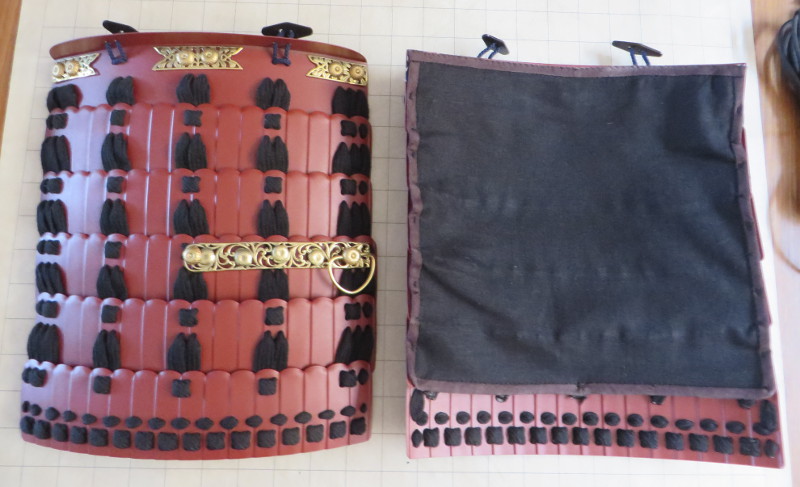
· Kote: fabric sleeves covered with chainmail and plates, protecting from the shoulder to the hands. They allowed good arm mobility while offering decent protection for the upper limbs.

· Kabuto: the iconic samurai helmet. Its shapes varied, sometimes becoming extravagant—imitating a bear’s head, a seashell, or court hats, sometimes in excessive dimensions! Like the Dō, some were capable of stopping musket bullets, which was shown by a dent on the helmet proving it had been tested and the projectile had not pierced the steel.

In the Bujinkan, many of the techniques taught are adapted for armored combat. The posture and movements allow effective motion while wearing armor. One of its nine schools, Kukishinden, specializes in armored grappling, known as yoroi kumiuchi.
 Blog
Blog Français
 Nederlands